
The second ever camp officially ended on August 20th. The 12 days of fun, challenge and excitement left many of the 6th and 7th graders in anticipation of the next round. You can read all about it and see more images on facebook. We hope to start a true foundation for this outdoor leadership experience.
Author: Modesto Vega
-
Environment & Leadership Camp
-
Climbing ever higher
 Students from Perse School, Cambridge (UK), interacted with the Design Team to design a tower for a new adventure playground. The students travelled from Cambridge to Shey in summer 2009 and built the tower themselves, much to the delight of Druk Padma Karpo students.
The Perse students then went off to explore the big montains – and here is their story.
-
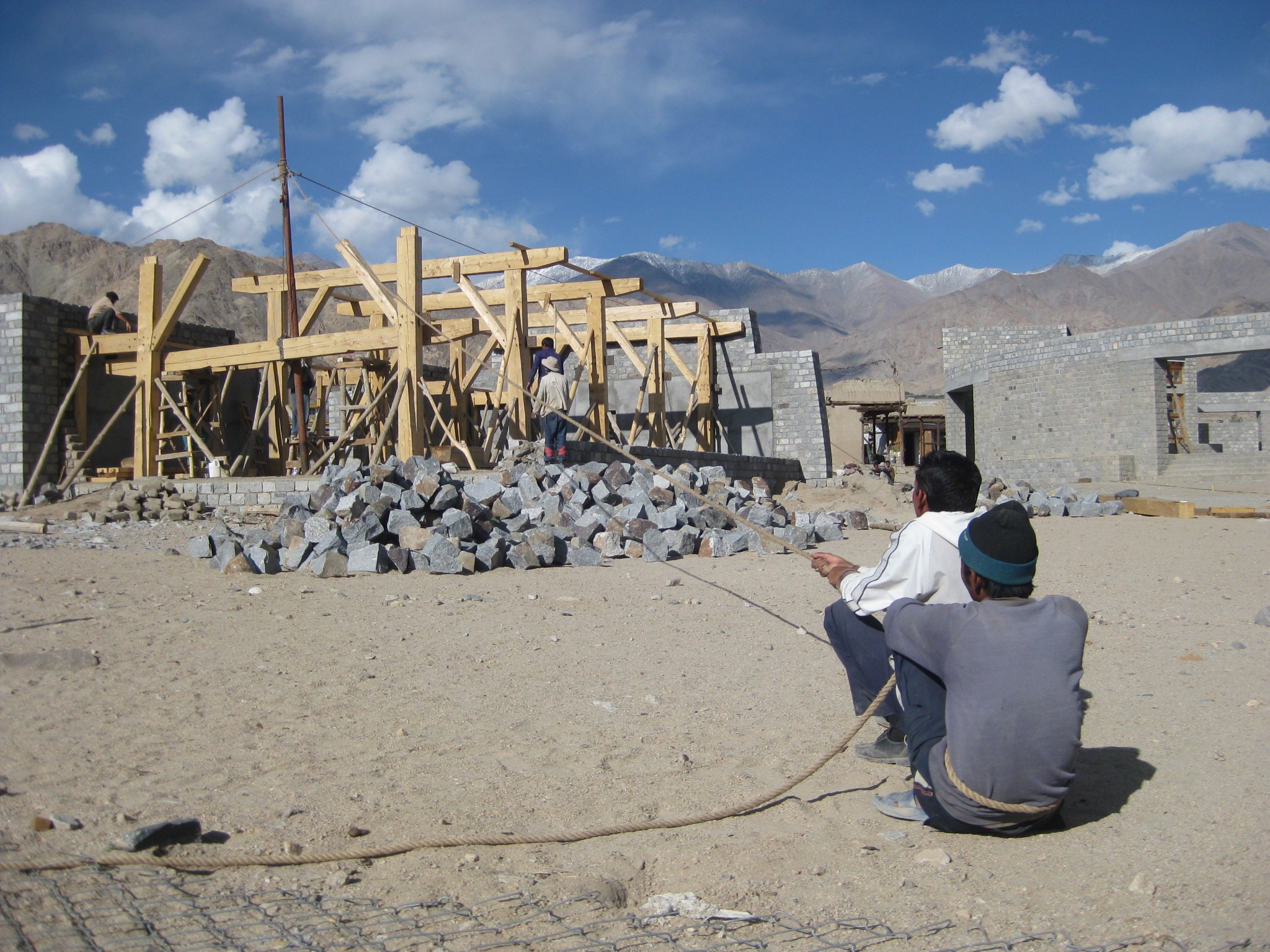
Classrooms manifesting
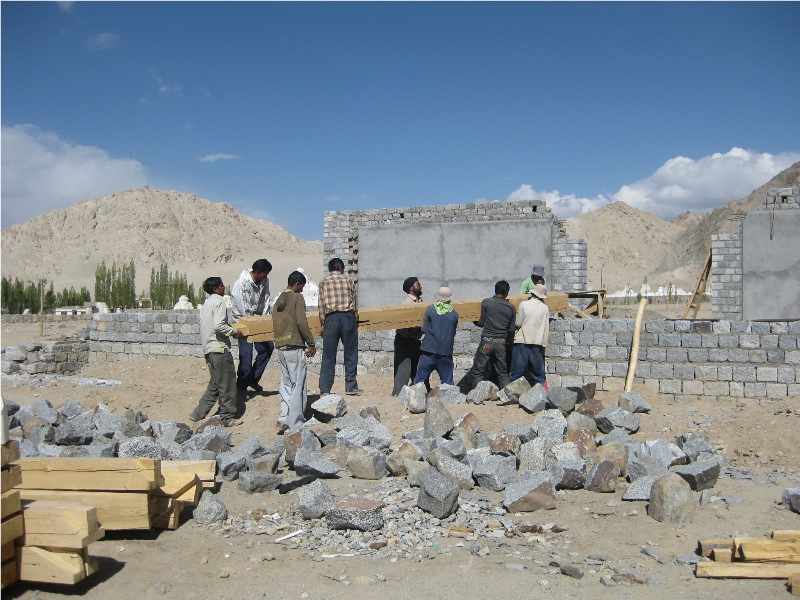
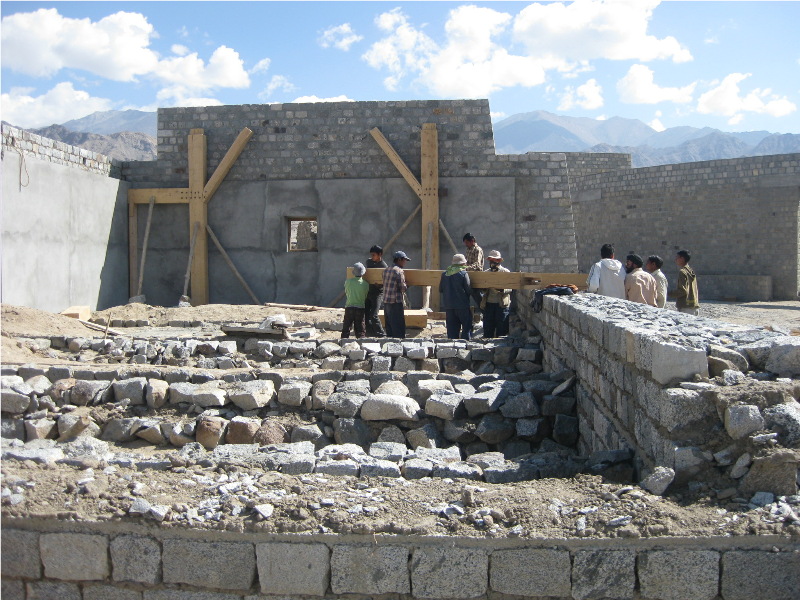
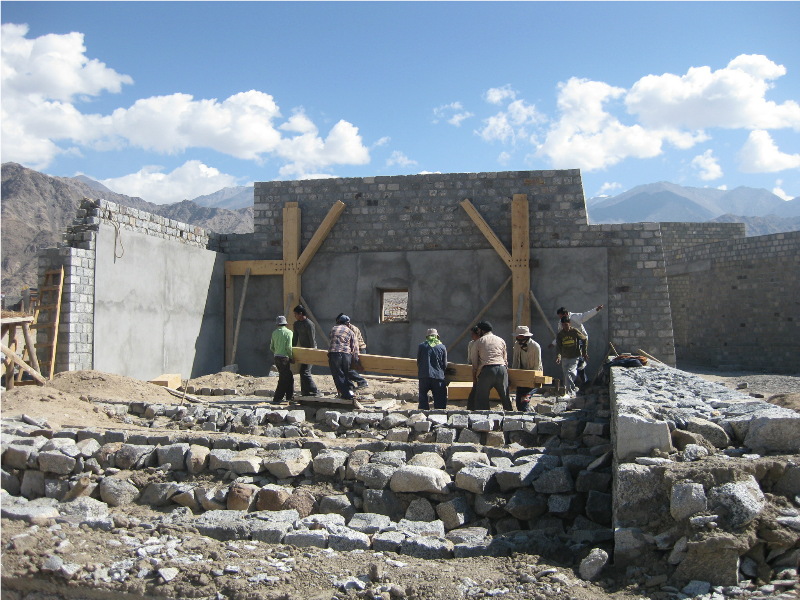
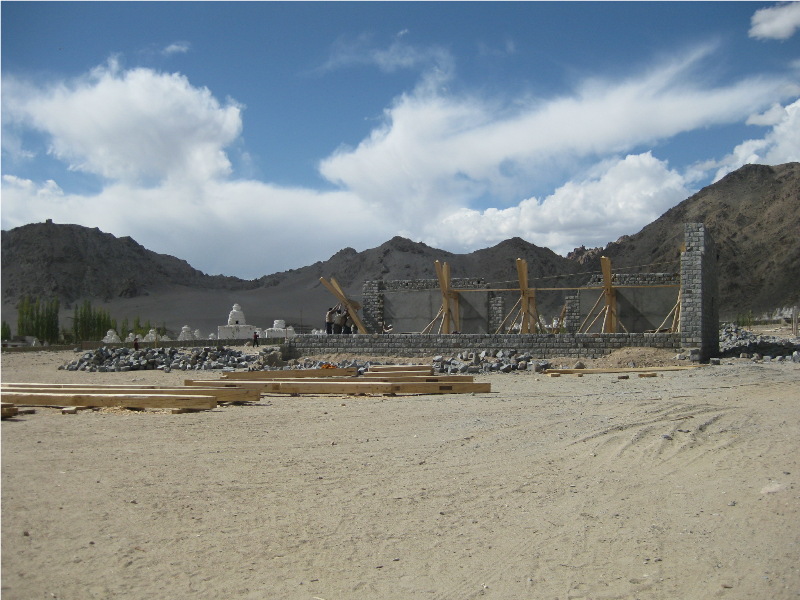
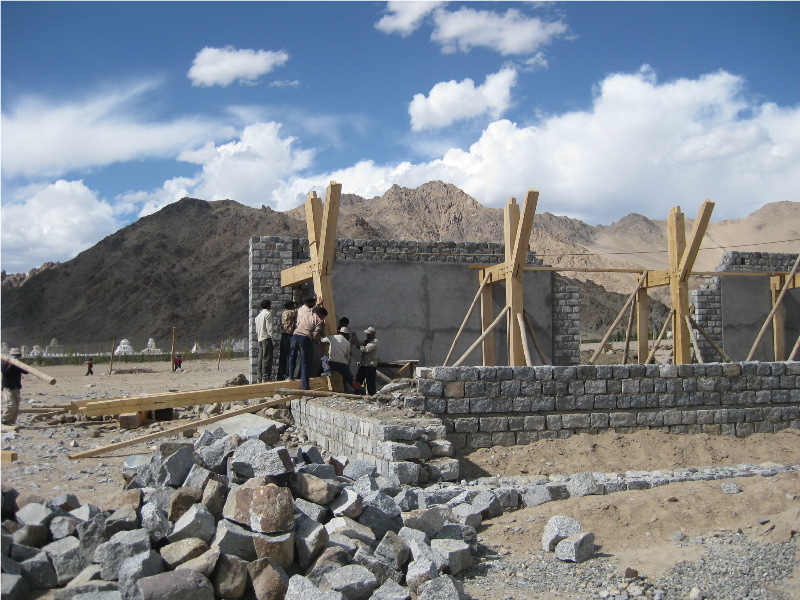
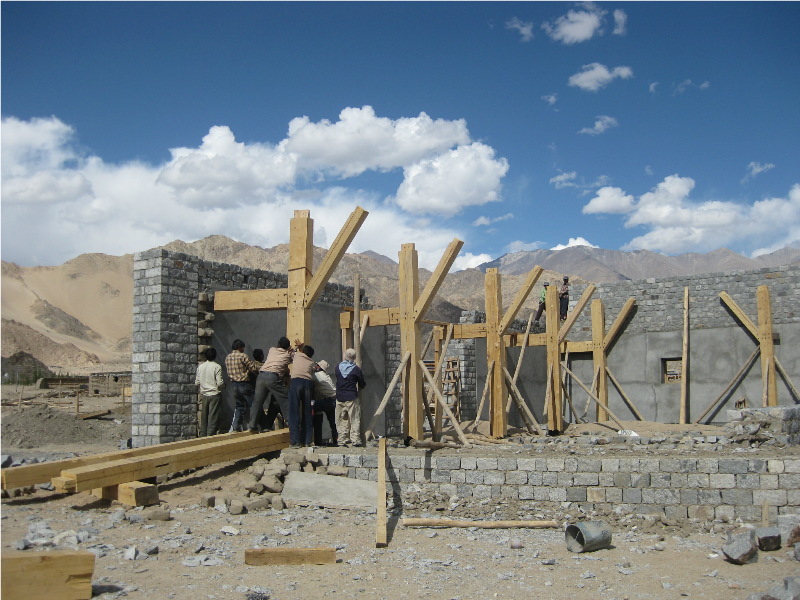
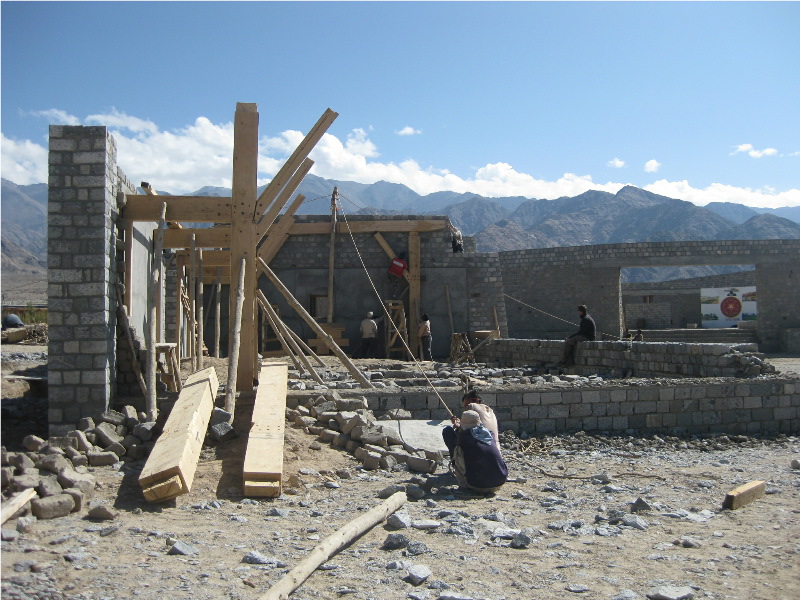
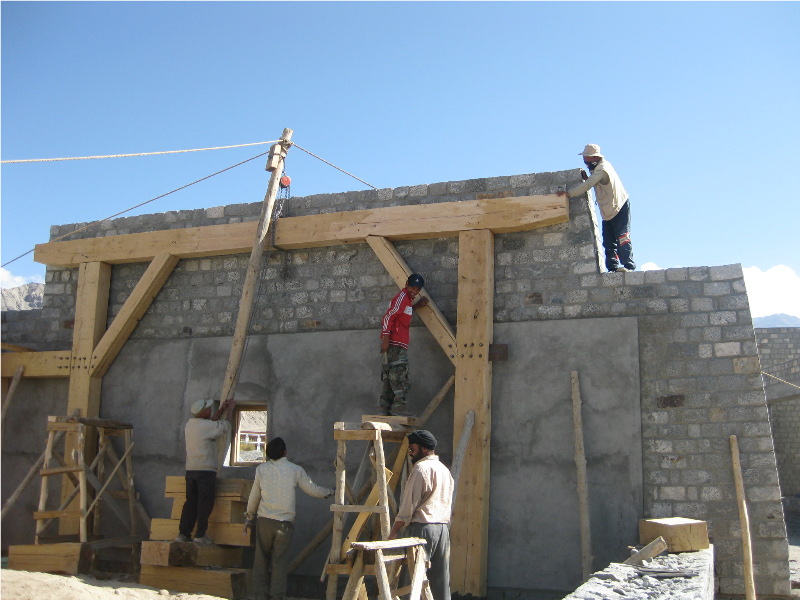
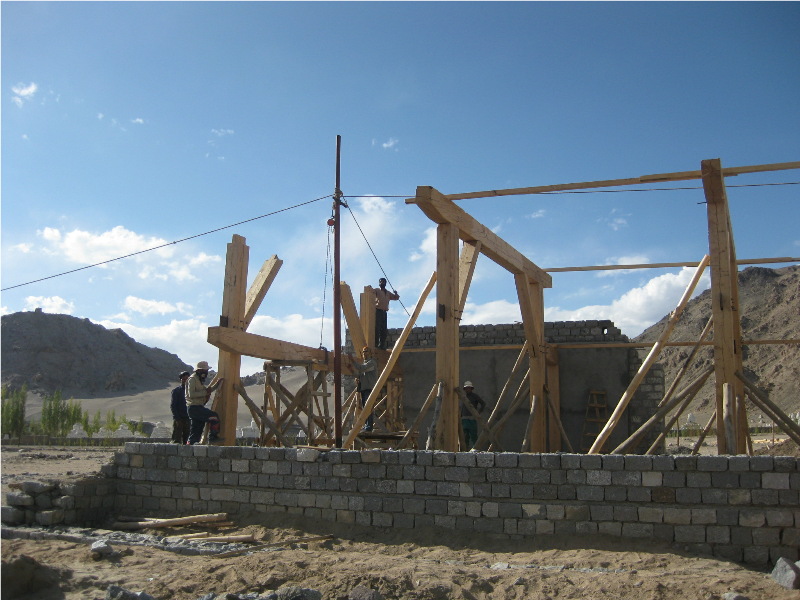
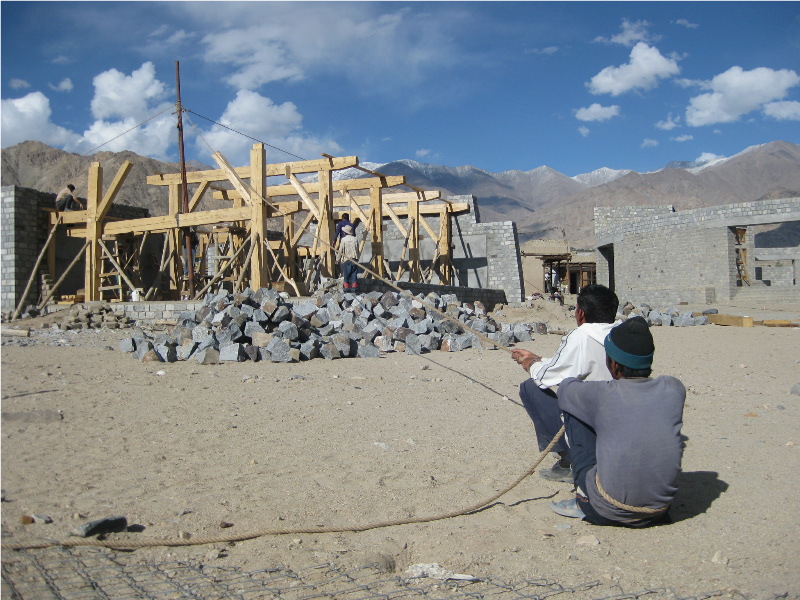
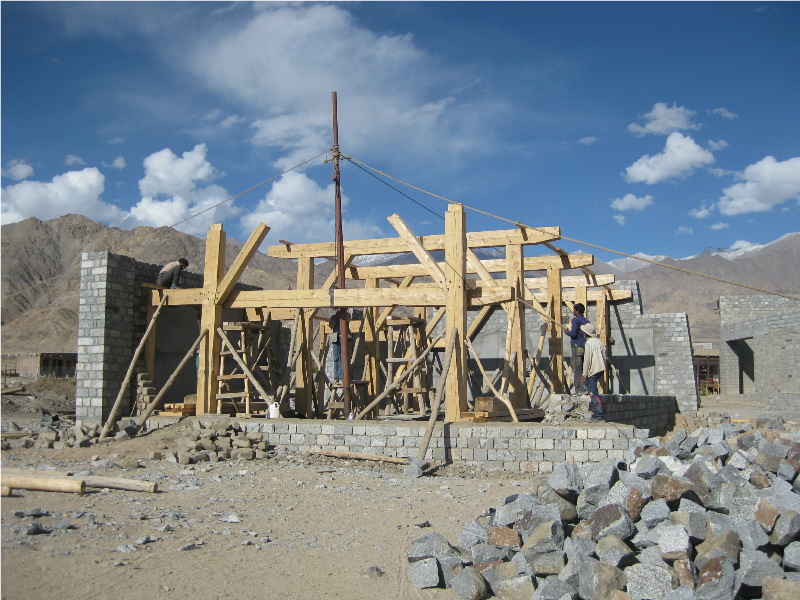
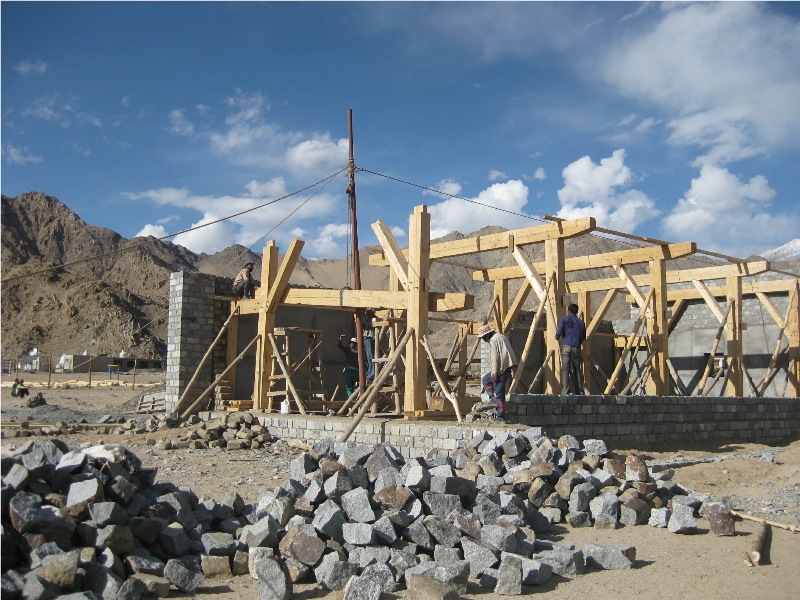
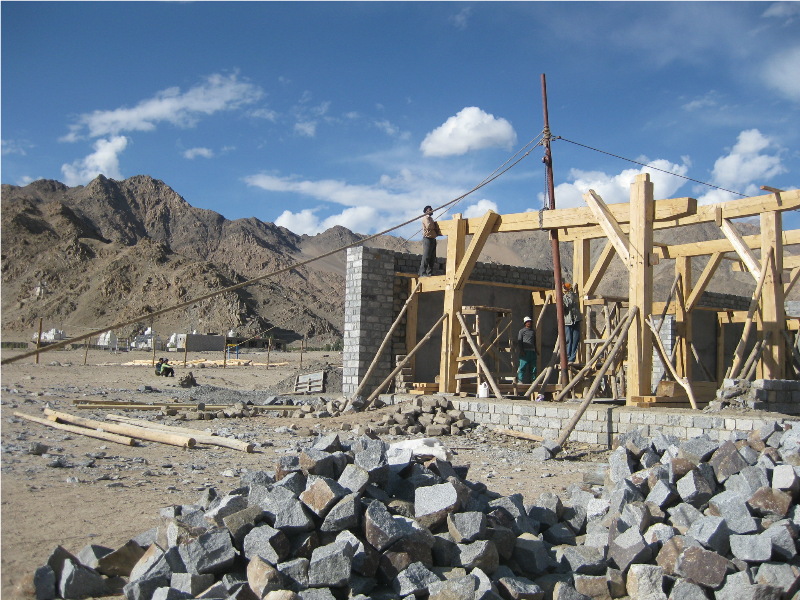
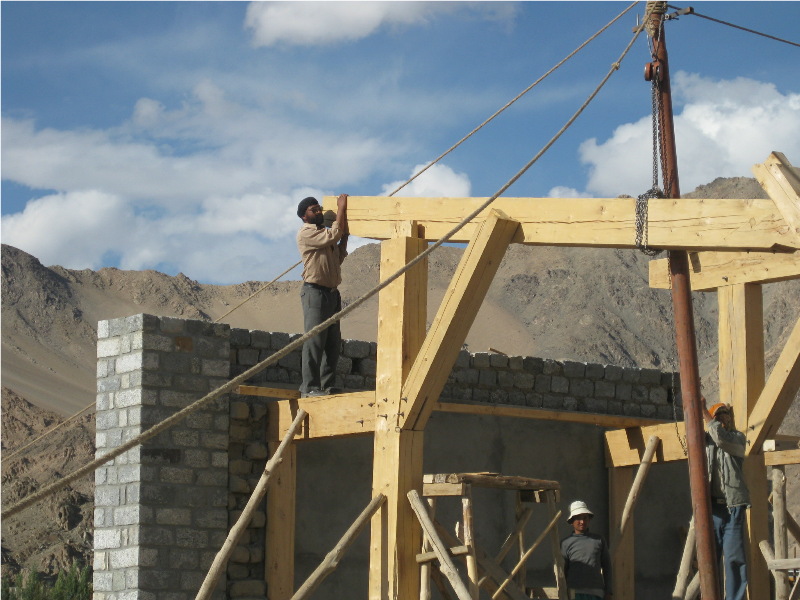
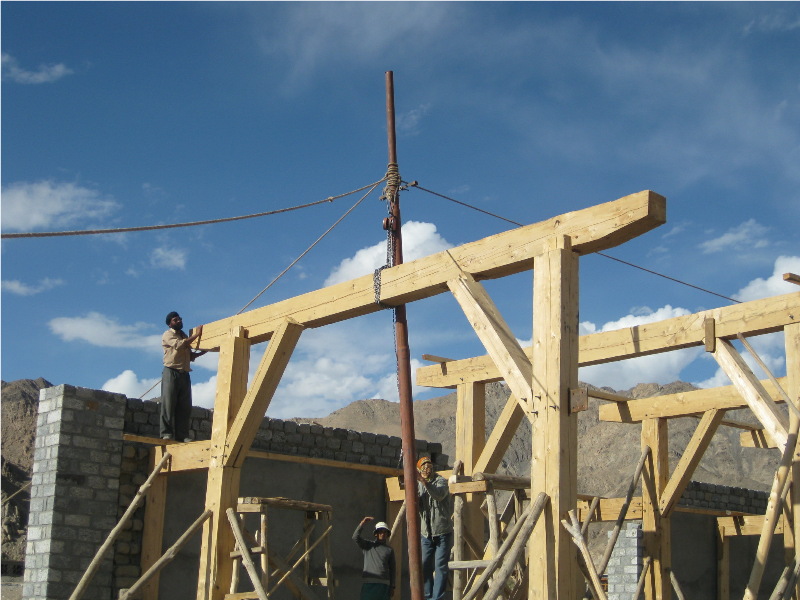
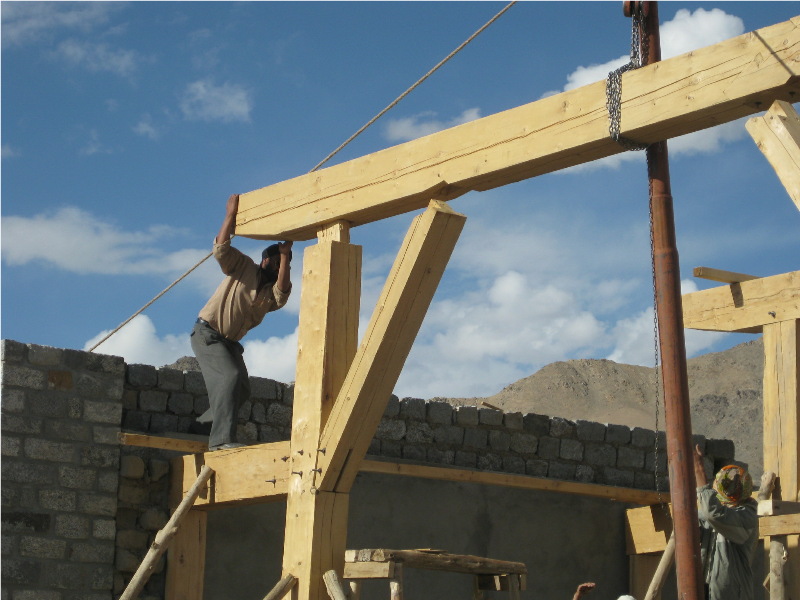
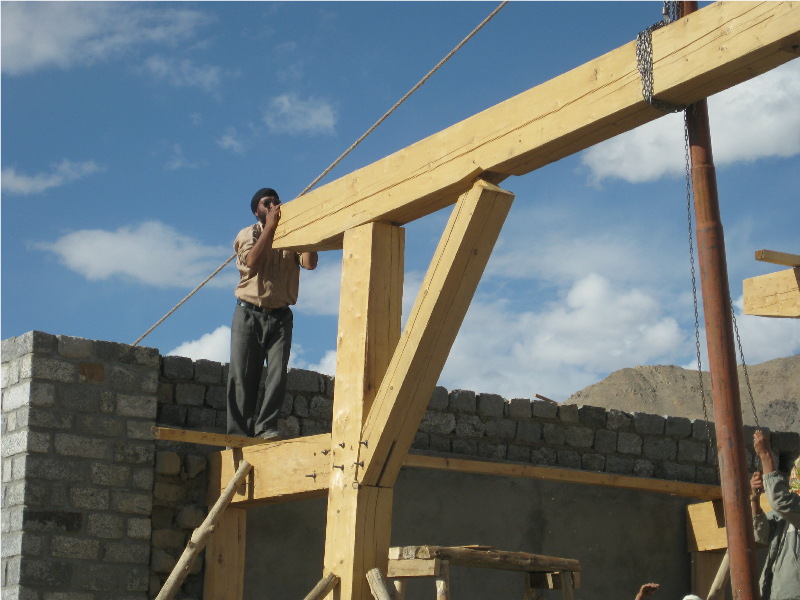
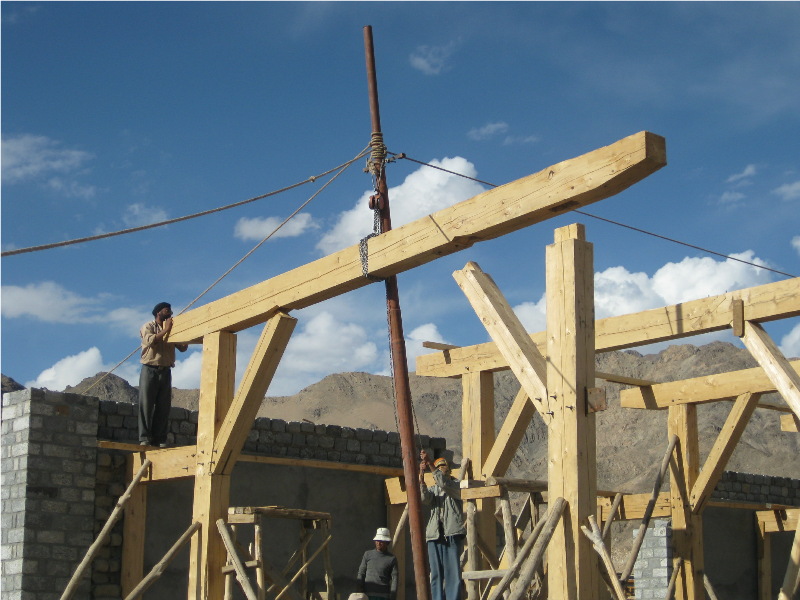
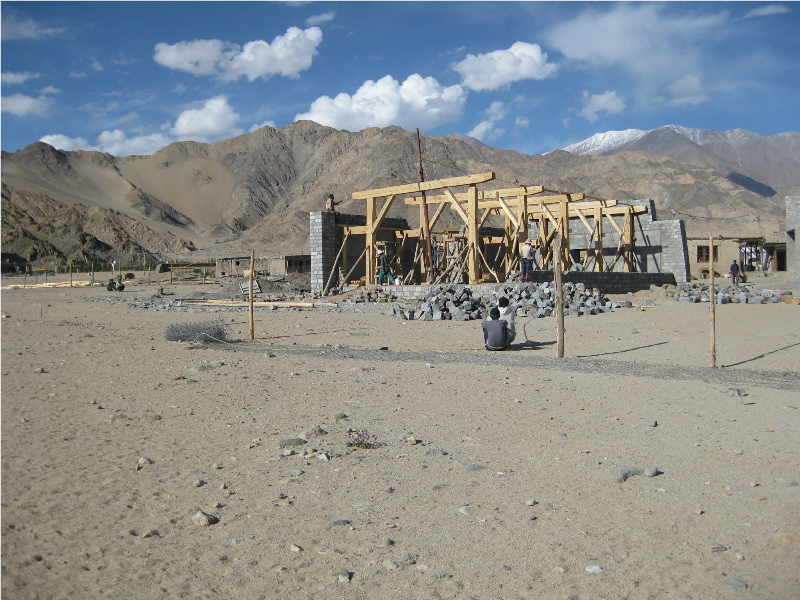
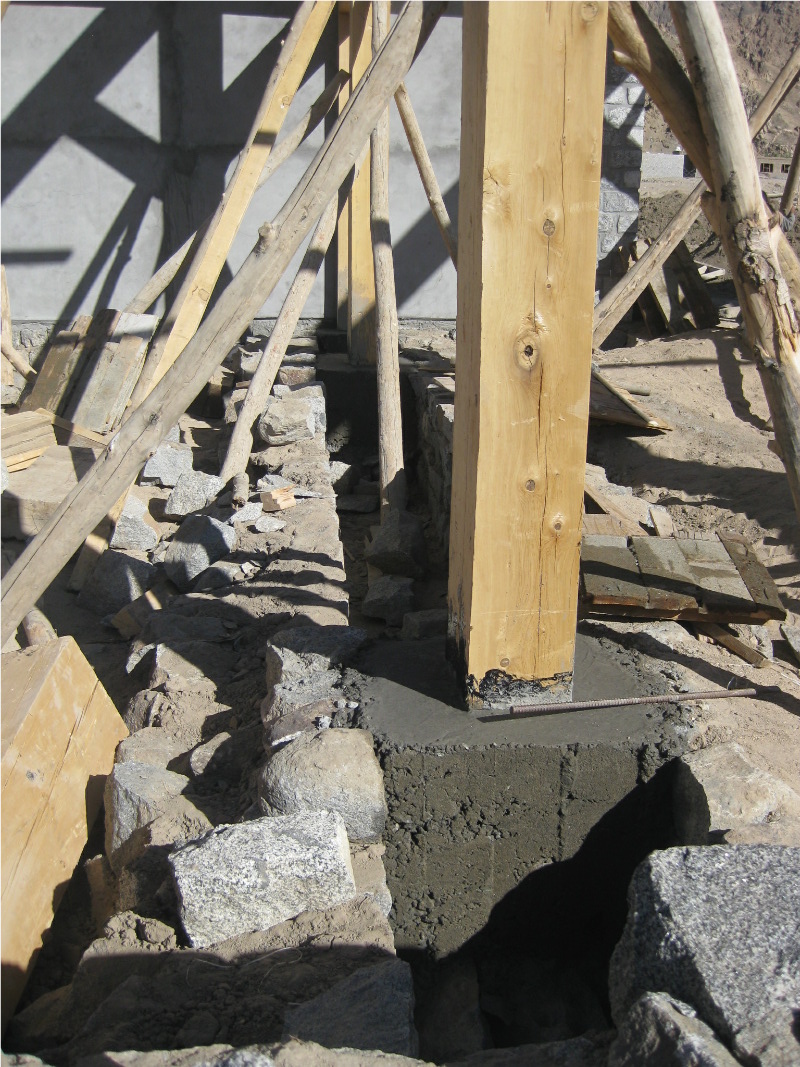
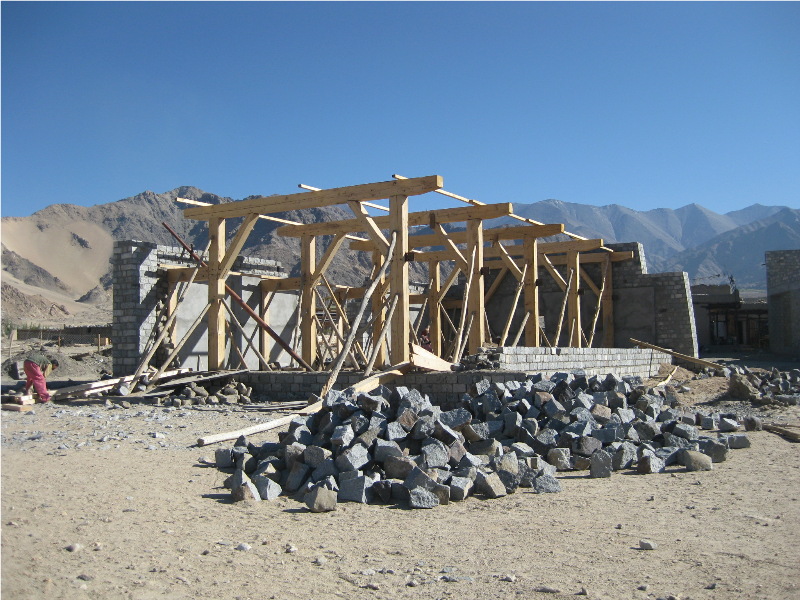
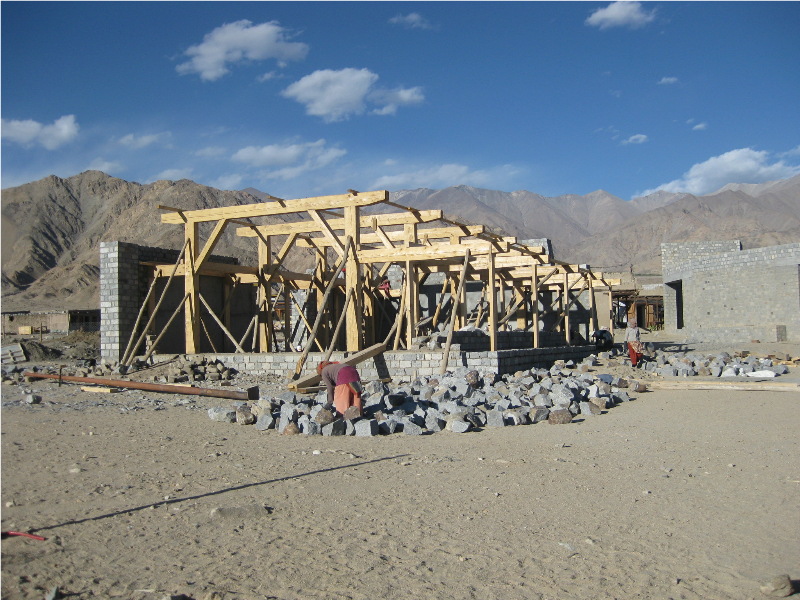
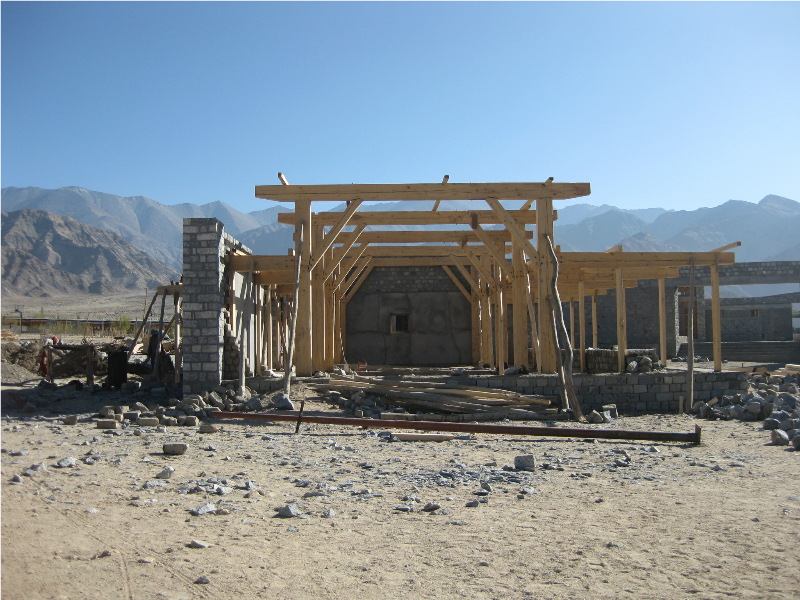
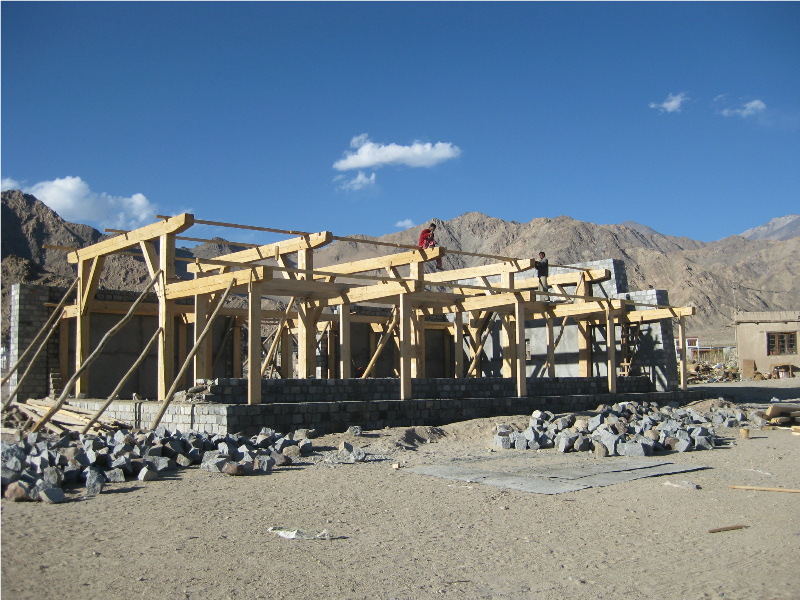
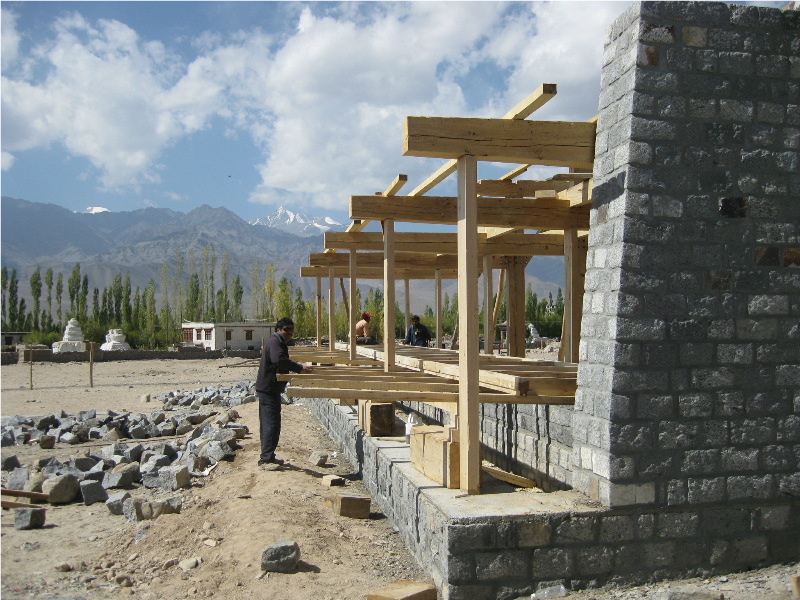
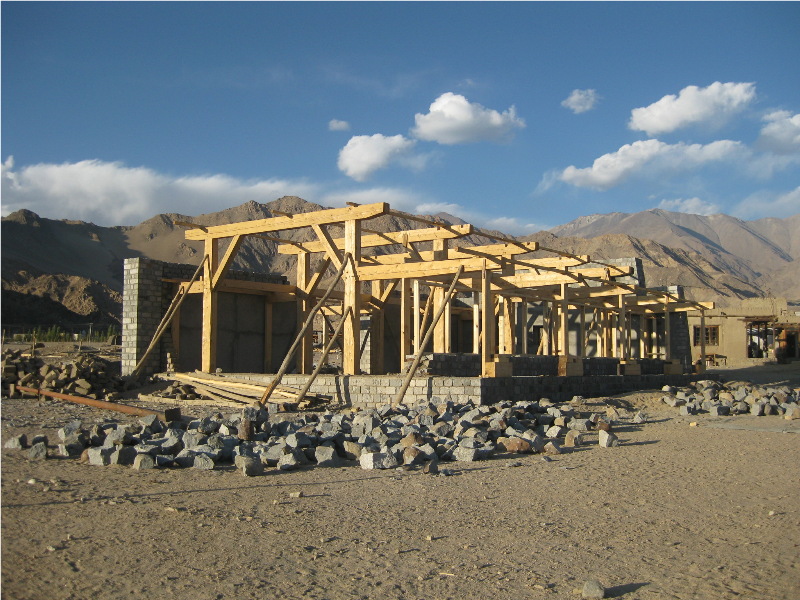
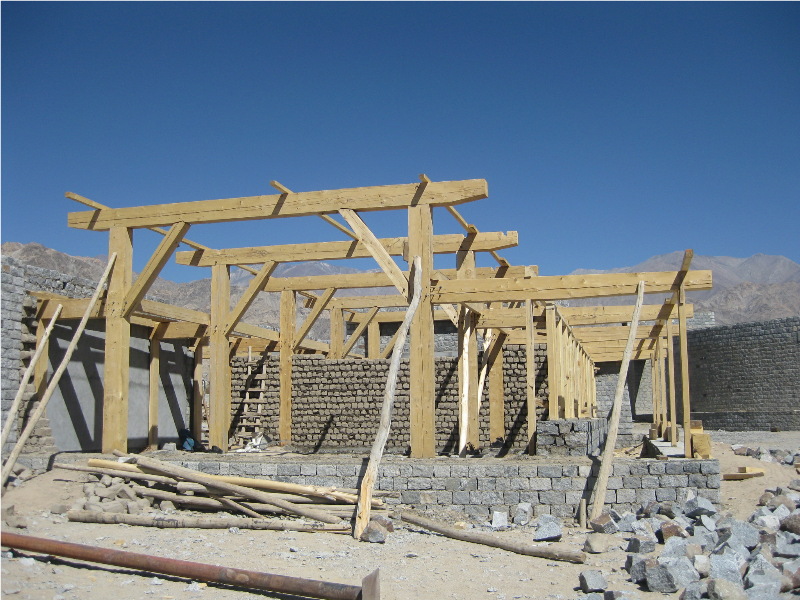
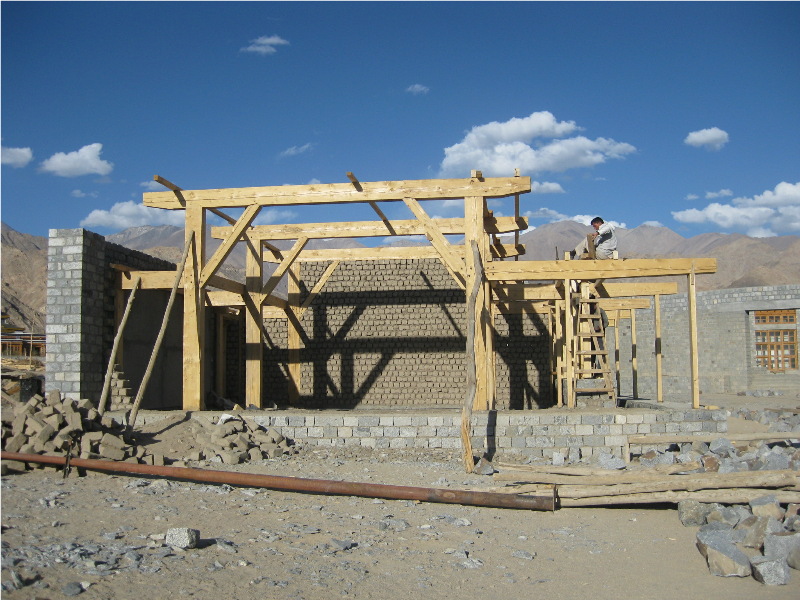
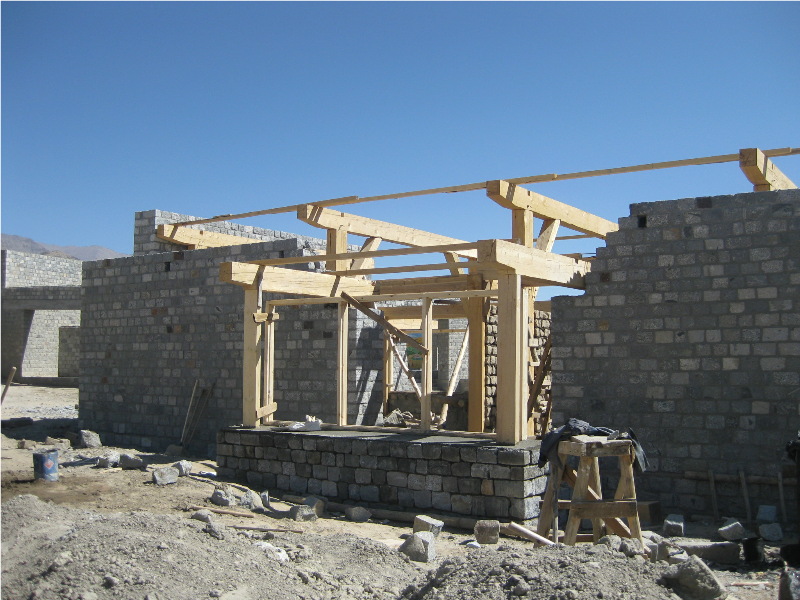
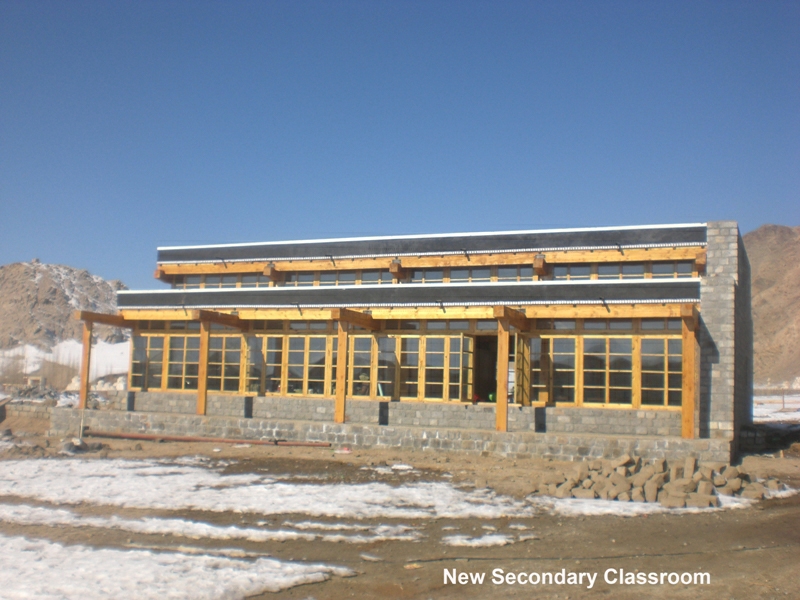
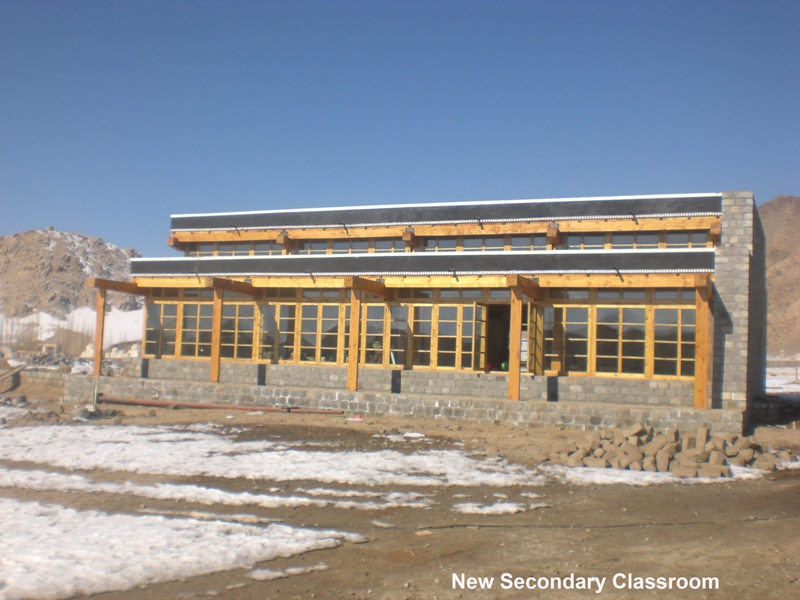
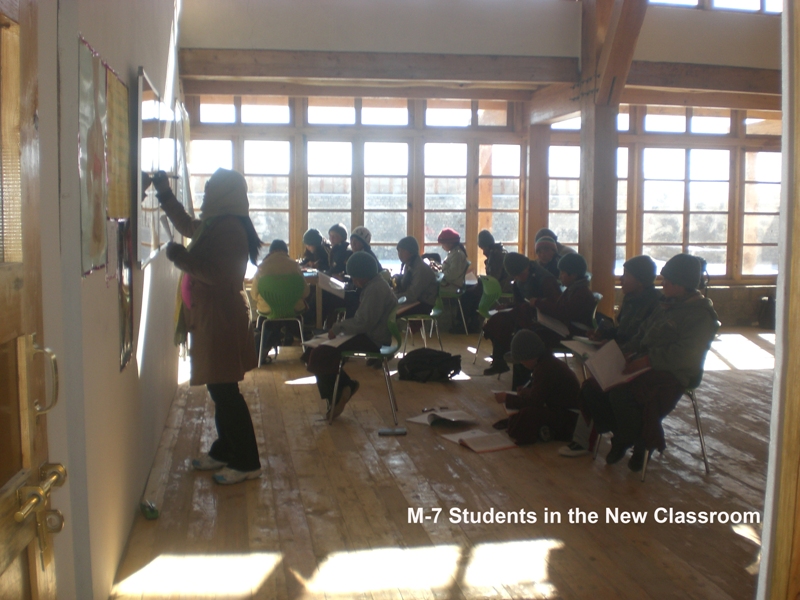
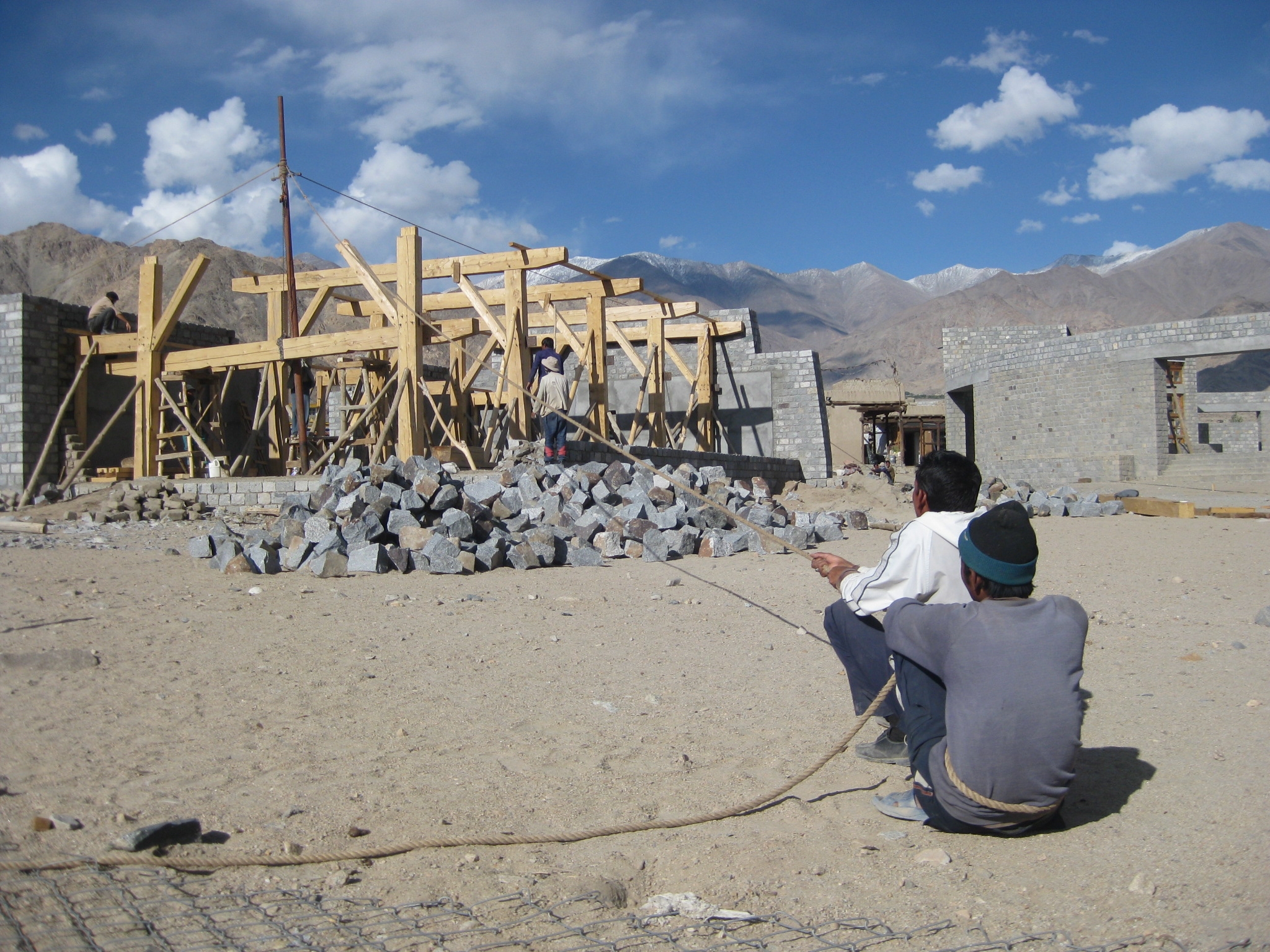
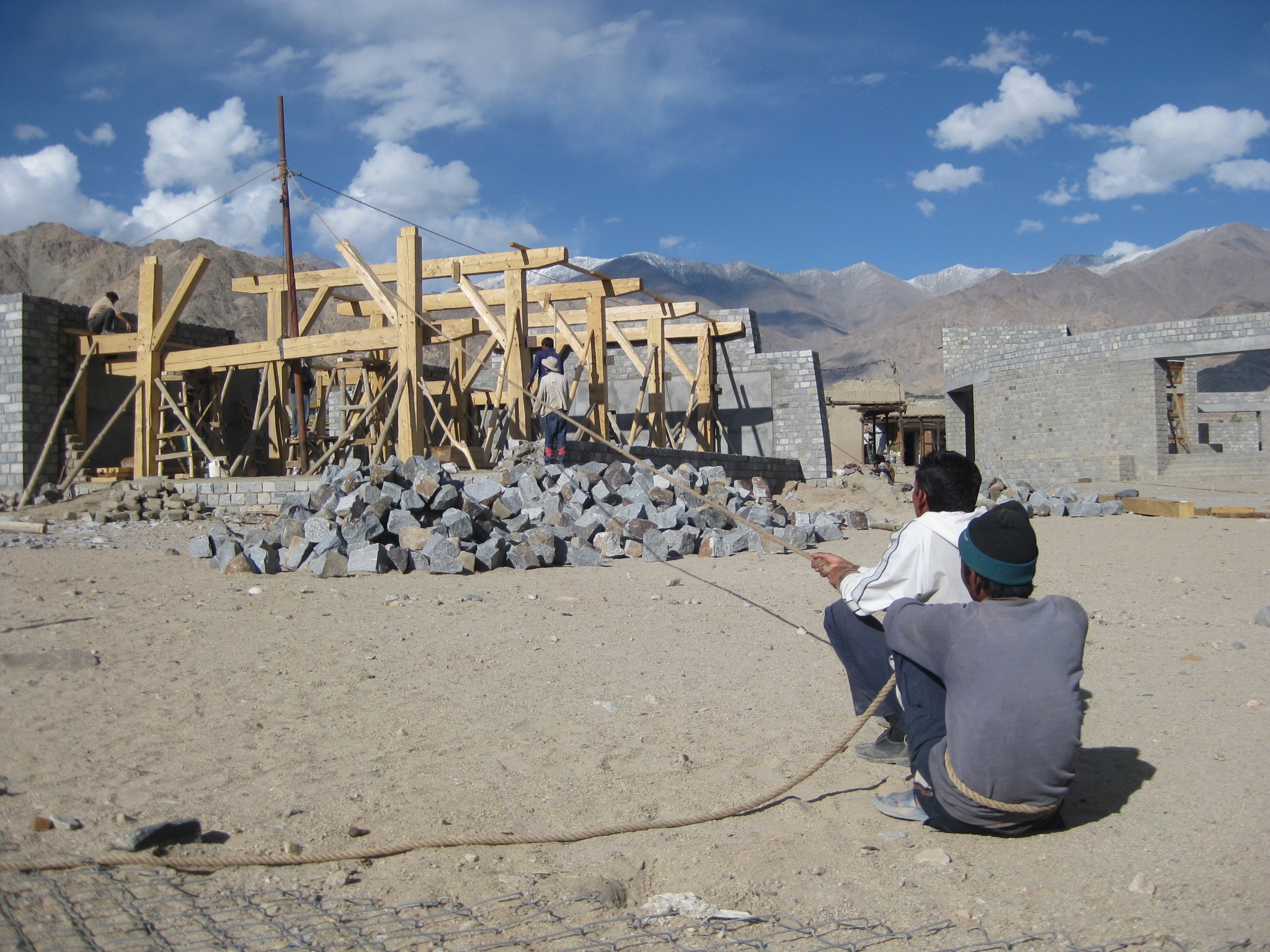
Two secondary school classrooms started manifesting on the campus during September. Of course a lot of work had already gone into building the foundations and pre-fabricating window frames, but the skill of the carpenters was a joy to see. The classrooms will be in use from November.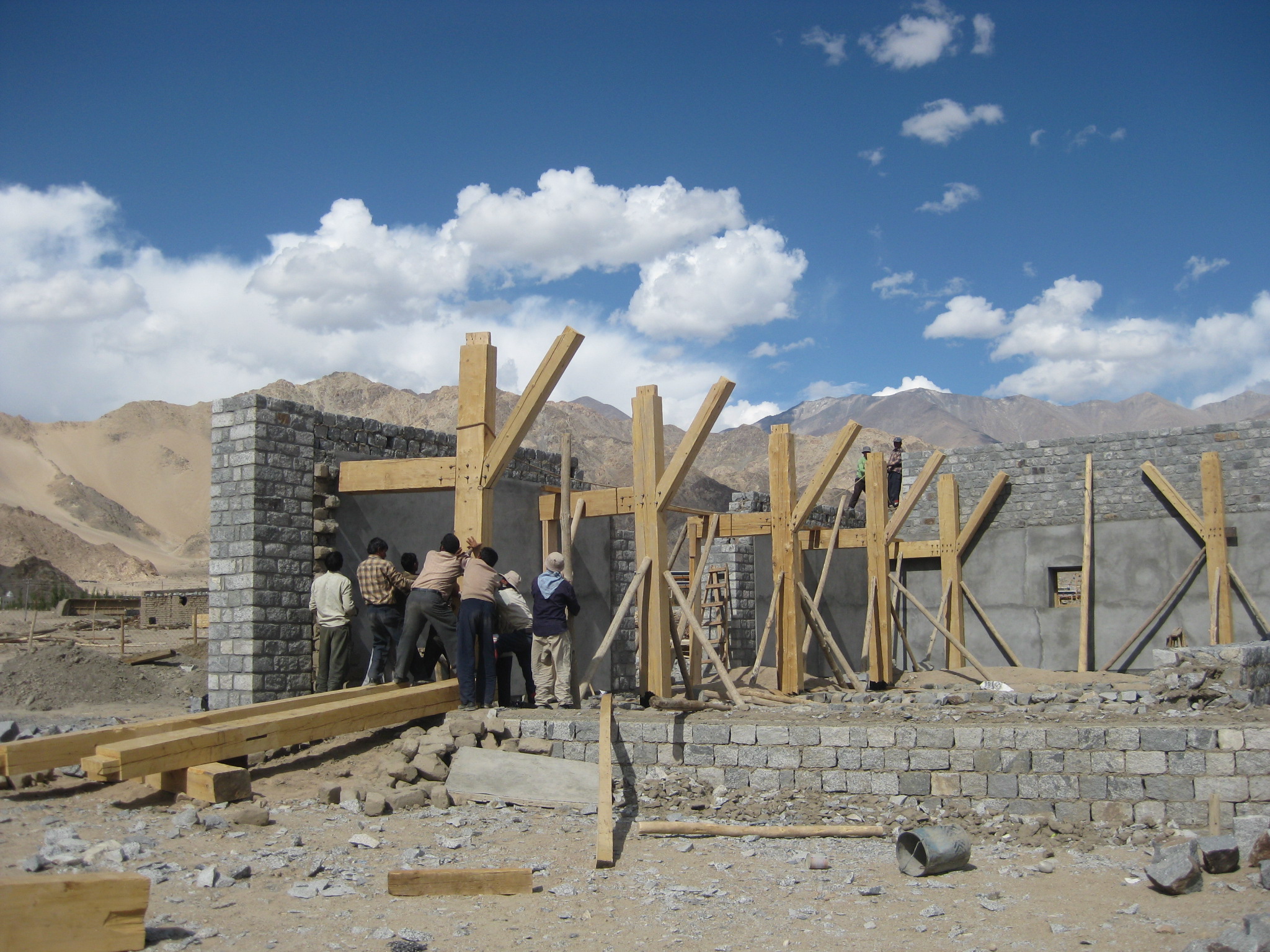
-
Win-win volunteering in Shey

Around 100 international volunteers contributed during 2009 on the Shey campus. Some helped inside the school with educational aspects, while others worked to develop a recently-launched ‘Living Traditions’ heritage project. International volunteers and Ladakhis benefit one another.
A group of students and staff from St Christopher School, Letchworth (UK) visited Shey in April – the third such visit from ‘St Chris’ under the leadership of Edwin Gruber. The group spent time at the school helping Ladakhi students with ‘learning through fun’ before heading off for a challenging trek very early in the season. Here you can view a movie made by the St Chris students.
Michelle Fan and Julayne Farmer from the USA are working on film & heritage aspects and a photo-literacy program respectively, while ‘gap year’ students Rocky Bamford and Josh Torrance from UK helped with English language skills. Read Julayne’s blog
Students from Alton College raised funds for Druk Padma Karpo School before their departure from UK. In mid-July they embarked upon a 4-week expedition to Ladakh, which included building an exercise trail on the school campus, followed by an arduous trek in the Markha Valley.

Nearly 30 architectural students from Portland State University, the University of Texas and elsewhere accompanied Professor Sergio Pelleroni on a month-long exploration of Ladakhi customs and culture, and architectural traditions and methods. They worked in four areas: (a) understanding nomad customs and erecting a rebo (traditional nomad tent dwelling), (b) developing innovative sun shading devices, (c) fitting out a large greenhouse where food can be grown (see image); and (d) helping with landscaping measures.
-
Fun fundraising at DukeFest 09

Sunday 2nd August: fine summer weather, the garden of a great English pub located in beautiful countryside, excellent food and lots of good music … a recipe for enjoyment and for raising funds for Druk White Lotus School. The Duke of Cumberland pub is located in a small village not far from the south coast of England. Around 300 people enjoyed the skills and talents of a range of singers, bands, poets and performers at DukeFest 09. Funds were raised for the school through an auction, a raffle and games – and our thanks go to all at ‘the Duke’, the performers, and everybody who participated.
-
Walking on the World’s Rooftop
His Holiness Gyalwang Drukpa together with about 500 nuns, monks and students walked for 6 weeks during May-July from Manali at the base of the Himalaya up to Hemis in Ladakh – a distance of some 400km including the ascent and descent of two 5,000m passes and trekking across other high altitude areas.
The ‘Pad Yatra’ pilgrimage raised funds for several humanitarian activities, including Druk White Lotus School.
Pad Yatra link.His Holiness visited the school on 4th July, accompanied by His Excellency Khamtrul Rinpoche, VIPs from Asia and the United States, and a group of 30 media folks. The students performed traditional songs and dances for the visitors, and displayed their skills and achievements. Here you can see a short clip of the culture show the students gave..
Slideshow
-
Award for Inspiring Design

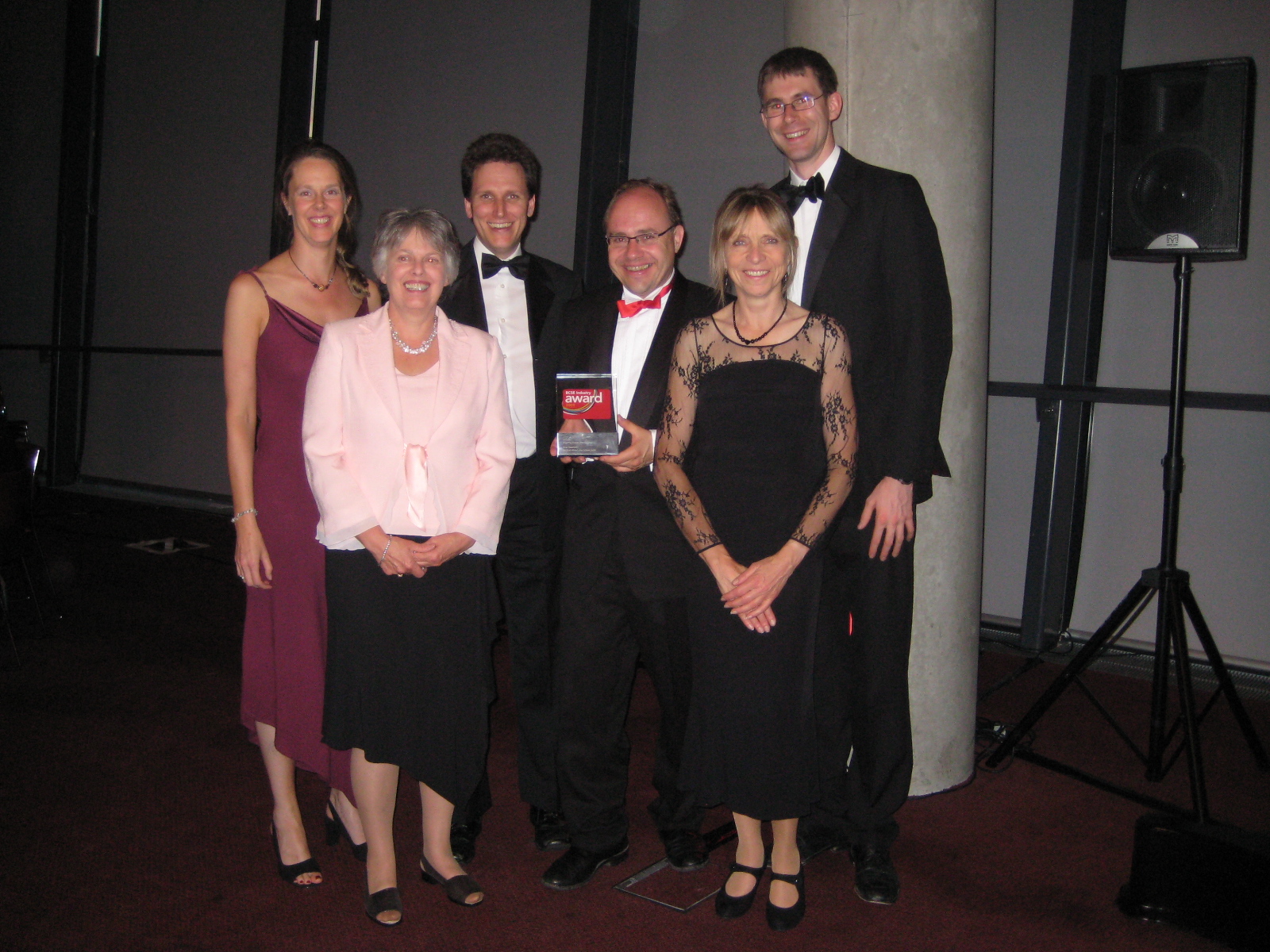
Arup Associates has won an international award for ‘Inspiring Design’ for their work on Druk White Lotus School. The competition was arranged by the British Council for School Environments (BCSE).
-
In the News
The Druk White Lotus School continues to be a project that attracts much attention in the architecture and construction press due to its fully sustainable design brief. This is an article from World Architecture News , which has just been published. Articles have also recently appeared in Metropolis (Feb 2009) and the Italian/Middle Eastern journal “Compass”
-
Interview with Palmo

Listen to an audio interview from Ladakh – with Bodhic teacher Palmo describing her experiences at the school.Read a transcript of the interview below.
My name is Palmo. Since 1996 I work in a school – another school called Ladakh Public School – and I worked there for 12 years. And last year when I have an interview that there’s a post for the Tibetan, so I am very interested to teach Bodhic because it is my own language and I have so many experiences to teach Bodhic, because it helps me to improve. Where I live, the environment, speaks Bodhi. I can take so many knowledge from the big books and some resource persons in TCV. So the Bodhic language is very related for my environment and I was interested to become a Bodhic teacher. So I came and interviewed and I was selected. So it is very fortunate for me to be selected and come here as a Bodhic teacher in this Druk Padma Karpo School.
I was very eager to come here to teach Bodhic because my godparent, who was in England and who was in America when I was only 13 years old, and I write about my life and about my works and he advised me that the Druk Padma Karpo School is very good for you. So I came here and I got this and I was very happy when I heard that I was selected. So I immediately phoned to my Papa and he said that this is excellent and so now you have to improve your English and so he sent me so many English tapes. And besides this, the local language is very important. You have to improve it and I said that here so many resources like Buddhist Centre Institutions. I can get so many books which are related to the students to teach and some resources persons like Lama Rigzin and whenever I have some difficult space in Bodhic I can go there and ask them.
So my other one is my children and their Tibetan. Their Bodhic is very good as compared to the Ladadkhi government school. So I learned from my children also so many new Bodhic words and then I come – when I’m at home – I try to reconcile all the words and then in school I teach them – I try my best to teach them. Before I come to the school in our morning class I go through the textbook and see what is the real one how I should teach the children. And then now the children they all like the Bodhic to learn because before they are not so good in Bodhic. And then when they are not proper reading, their handwriting was not good, so when I teach them slowly, slowly now they are very happy. When I come into class they become very happy. They said that we know lots of things from you — like we improve our handwriting and we improve our reading. And so I was very happy because I worked so hard to teach them Bodhic – said that Bodhic is not so important for the Tibetan; it is for the Ladakhi. Because we all have the same culture, we have same Buddhist philosophy, thoughts. So when I – in this school I have to prepare the lesson plan so before Mme Maureen I have to write all this into the English. So I get lots of problem to change all these words into English. So I go to some resource persons and I find a dictionary in Tibetan and English, and I find so many new words. So I recollect all of this and then teach it. It helps me a lot because before what we do we learn only Bodhic but then we did not know much of the words in the English. So when I have to prepare a lesson plan in English so I work hard more on English as in Bodhic, because Bodhic is my own language to teach.
I’m interested because it is religious so I – whenever I have time I do some prayers and when in school – when I come here before the school, I also teach so many small, small prayer books and when I came here as a teacher in the Bodhic so its script is also written in the Bodhic language so it is very easy for me to teach them, so that is why I am very glad to be here as a Bodhic teacher. It is also very important for the Ladahkis because all their cultures are written in. We have the traditional – what to call – dress totally different, language different, but when we go through the grammar we are always same. So that’s why when I teach to them so sometimes I say that they must speak in the Bodhic language because it will improve your Bodhic – not that I mind necessarily because I say that you have to speak in English but it is for their gain – their gain that if they speak in ‘Little Tibetan’ then all their words are written in that Tibetan language so they cover more, so I don’t have to change all into the Ladakhi language. Like when I say it is a “big” so we say chenpo and we write chenpo and Ladakhi say chenmo, so then a little bit difference for them. So I said I teach in English sometime – when we are teaching in English, English to English is more to improve them. So when we are teaching in Bodhic language, it is better to speak sometimes in Bodhic language because it is more chance to catch up more knowledge from me.
For me it is a very great chance to work here because my Papa – it is only the advice of my Papa and he is coming soon and I hope that he will really like what I am doing here.
And then the Bodhic language is I think it is very important because in the Himalayan regions – now in Tibet almost demolished by the Chinese. So the left one is called the Little Tibet is Ladakh, so here we can know so many cultural things, like I can know sometimes the question is related when I teach through Ladahki history and monastery. My husband helps me lots in this subject because he is an artist. He knows so many things about Ladakh – gompas and the mural arts and all the Wheel of Life and all the different types of the Buddhas and so I gain lots from this field – Buddhist philosophy culture and then my own language is the grammatical. I have no teachers, but then I have so many resources books. When I feel some problems, I used to take the dictionary – I used to go to some resource persons and ask them help me. And when at home, I always try to write this on some piece of paper and then correct them and then discuss them with some of my colleagues who are also here about the Ladahki cultures I can learn from when it is related in the texts. If I have more knowledge then I teach the other Ladakhi colleagues here about the Ladakhi history. So when last year it was about the Ladakhi history I had not heard before and I did not learn. So I asked Lama Rigzin and I got to the library it is a good history books it is written by some great historian. So you know, the books help me very lots. And it is for me that I like the Buddhist Bodhic because I know English well – not well – but then a little and then maths I am also interested. But at last after last ten years I change it – my mind – that I want to become a Bodhic teacher because it – when we learn Bodhic we can read so many Buddhist prayers so this – the prayers – keeps our minds happy. Bodhic language is the only language that when we read everything, and we feel very peaceful. So that’s why I think that the Bodhic is very important for the Ladakhi and of course for we Tibetans it is also very important – all the Himalayan regions have to learn a little about the Bodhic.
-
Enlightenment
The mains electricity supply continues to be sporadic and unreliable and so the school has had to rely on a diesel generator to meet essential needs. The situation was transformed in October 2008 when SunTechnics Energy Systems Pvt. Ltd installed and commissioned an advanced solar energy system. The new system complements the existing solar installations that pump groundwater for domestic and irrigation purposes. The Shey campus is now close to energy self-sufficiency. The school will need to install more photovoltaic panels, inverters and batteries year-by-year as the campus continues to expand. The new solar energy system was part financed by carbon-offset investment by Arup Associates.
Slideshow