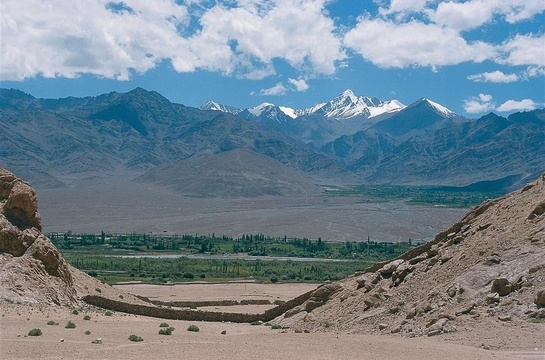
In this gallery you can find out more about the unique Tibetan Buddhist culture and geography of Ladakh.
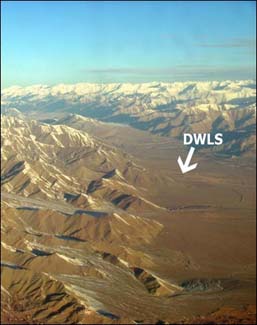
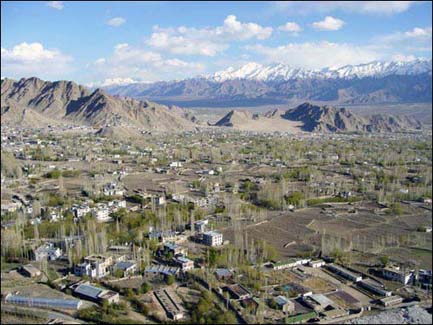
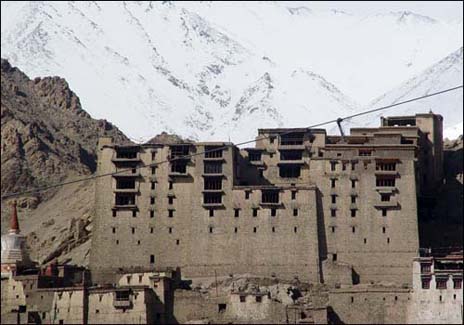
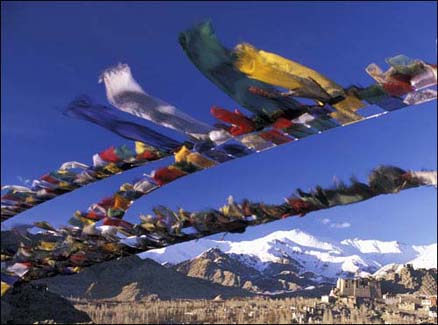
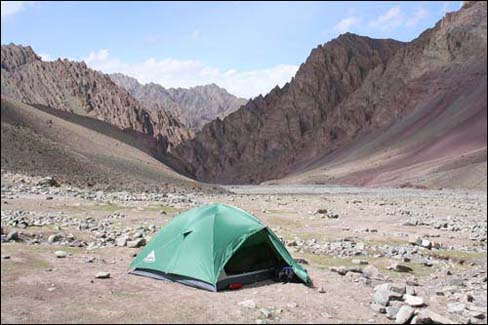
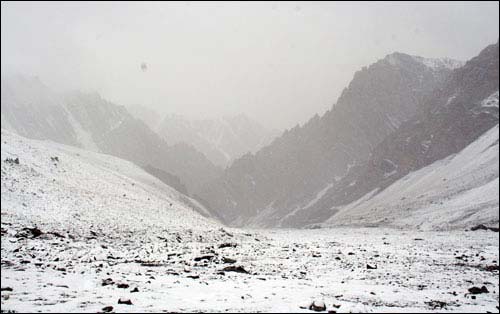
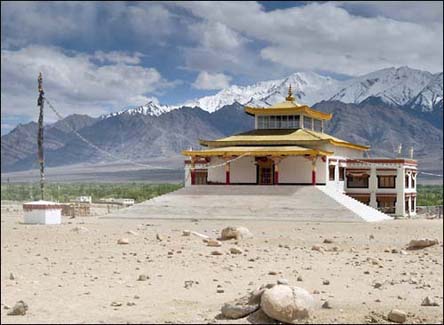
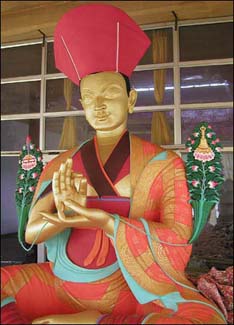
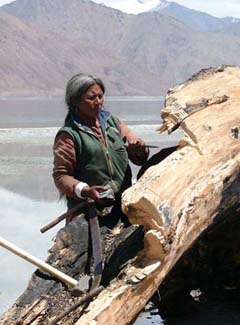
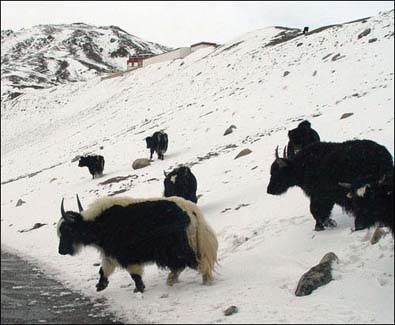
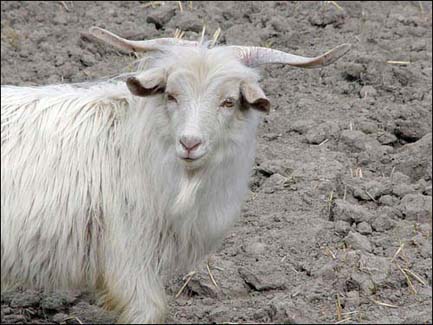
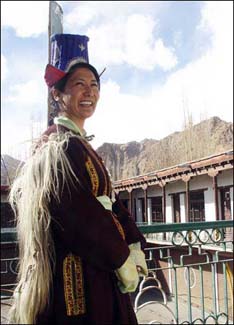
The school is located on the outskirts of the village of Shey, 15km along the Indus valley from Leh.Leh, the capital of Ladakh. was formerly an important trading centre linked to the Silk Route. The nine-storey rammed earth royal palace built by king Senge Namgyal (circa 1570-1642) pre-dates Lhasas Potala by several decades. Tibetan prayer flags overlooking Leh palace: prayer flags are traditionally strung along mountain ridges and peaks in the Himalayas and the wind transports blessings to benefit all sentient beings.A typical valley near the school during the summer. Ladakh was opened to international tourism in 1974 and has become a popular destination for trekkers.The same valley in winter, no camping! Ladakh, a high altitude desert, has an extreme temperature range: from +25°C in summer to -25°C in winter. Our award-winning buildings mitigate this variation through the use of passive solar energy.The Naropa Palace was built at the top of the school site in 2003-4. His Holiness the 12th Gyalwang Drukpa performed the rare Ornaments of Naropa ceremony there in 2004 (a ceremony performed only once in 12 years).A recently completed statue of Pema Karpo ('White Lotus' in Tibetan) who was a great spiritual master and the 4th head of the Drukpa Lineage of Tibetan Buddhism.Fetching raw materials from Pangong Lake, the worlds highest brackish lake at 4,267 metres above sea level.A herd of domestic yak. Like other bovines, yaks are kept primarily for their milk, wool and meat, but are also used as beasts of burden, transporting goods across mountain passes for local farmers and traders.A Himalayan mountain goat, whose fine undercoat – pashm is the raw material for pashmina (cashmere) garments.A local villager, Dechen Angmo, in traditional Ladakhi dress.The school is located on the outskirts of the village of Shey, 15km along the Indus valley from Leh.Leh, the capital of Ladakh. was formerly an important trading centre linked to the Silk Route. The nine-storey rammed earth royal palace built by king Senge Namgyal (circa 1570-1642) pre-dates Lhasas Potala by several decades. Tibetan prayer flags overlooking Leh palace: prayer flags are traditionally strung along mountain ridges and peaks in the Himalayas and the wind transports blessings to benefit all sentient beings.A typical valley near the school during the summer. Ladakh was opened to international tourism in 1974 and has become a popular destination for trekkers.The same valley in winter, no camping! Ladakh, a high altitude desert, has an extreme temperature range: from +25°C in summer to -25°C in winter. Our award-winning buildings mitigate this variation through the use of passive solar energy.The Naropa Palace was built at the top of the school site in 2003-4. His Holiness the 12th Gyalwang Drukpa performed the rare Ornaments of Naropa ceremony there in 2004 (a ceremony performed only once in 12 years).A recently completed statue of Pema Karpo ('White Lotus' in Tibetan) who was a great spiritual master and the 4th head of the Drukpa Lineage of Tibetan Buddhism.Fetching raw materials from Pangong Lake, the worlds highest brackish lake at 4,267 metres above sea level.A herd of domestic yak. Like other bovines, yaks are kept primarily for their milk, wool and meat, but are also used as beasts of burden, transporting goods across mountain passes for local farmers and traders.A Himalayan mountain goat, whose fine undercoat – pashm is the raw material for pashmina (cashmere) garments.